Why SLSA Mandates UPF50+ Hats
Learn why Surf Life Saving Australia requires UPF50+ wide-brim hats, what AS/NZS 4399:2020 means, and how to source compliant lifeguard hats at scale.
Byadmin
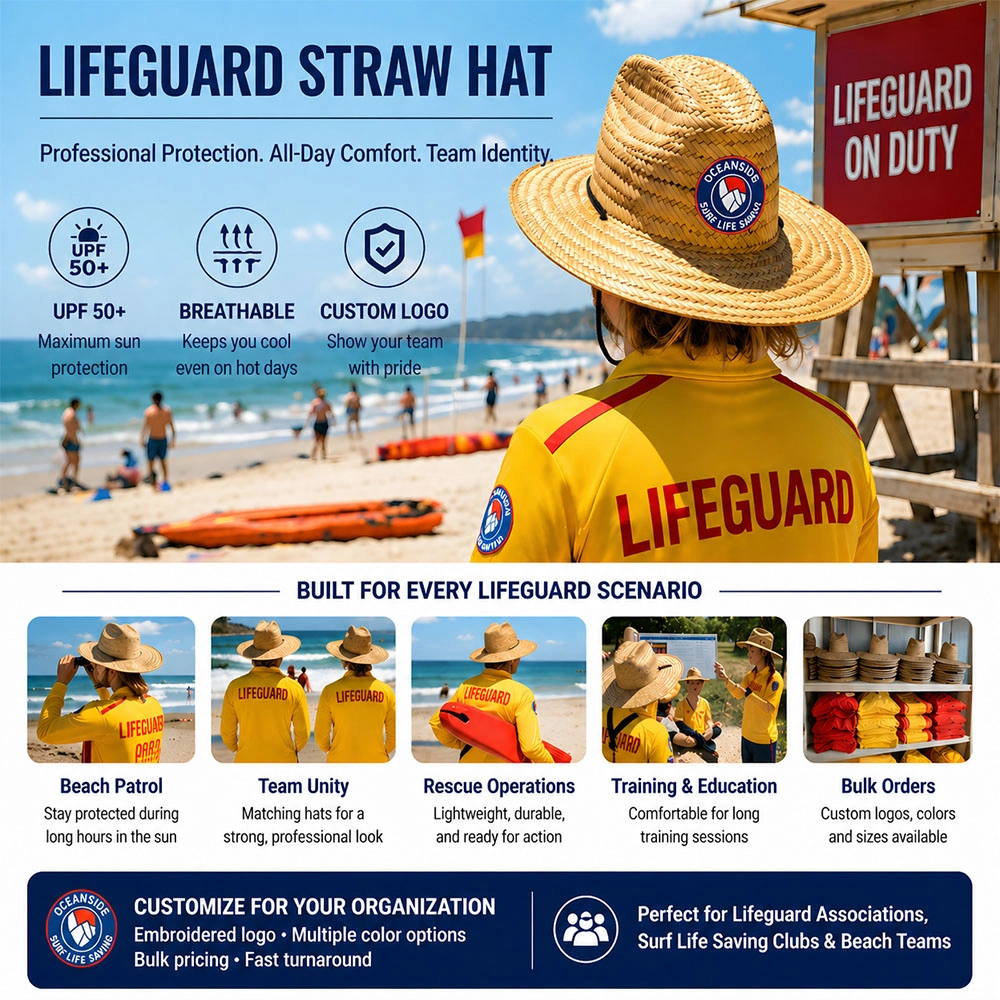
Table of Contents
Why SLSA Mandates UPF50+ Hats for Lifeguards — And What It Means for Procurement
When a lifeguard steps onto an Australian beach, they are not just wearing a uniform — they are wearing a carefully specified layer of occupational protection. Among the most critical items in that uniform is the wide-brim hat. Surf Life Saving Australia (SLSA) does not leave headwear to chance: its patrol uniform guidelines specify wide-brimmed hats as a required component of the patrol uniform, and the broader SLSA sun-safety framework — aligned with Cancer Council Australia and the SunSmart program — calls for UPF50+ rated materials throughout.
For procurement managers, uniform suppliers, and lifeguard association equipment officers, understanding why this standard exists — and what it demands from a hat — is the foundation for sourcing decisions that protect both people and organisations.
What Is SLSA and Why Does Its Uniform Policy Matter?
Surf Life Saving Australia is the country’s largest volunteer organisation, with more than 175,000 active members patrolling beaches across every state and territory. SLSA sets national standards for patrol uniforms through its Policy 1.05 (Patrol Uniforms) and related operational manuals. These documents define the minimum uniform requirements that every patrolling member must meet.
According to SLSA’s patrol uniform guidelines, the minimum requirements for an active patrolling member include a state-approved wide-brimmed hat or peaked cap as mandatory headwear when not in the water. The SLSQ (Surf Life Saving Queensland) Patrol Operations Manual goes further, stating explicitly that “wide-brimmed hats or red surf rescue peak caps are compulsory” to help avoid skin cancer and long-term eye damage.
The SLSA Community Surf Life Saving Certificate Manual reinforces this with the organisation’s six-S sun-safety framework — Seek shade, Slip into protective clothing, Slop on sunscreen, Slap on a hat, Slide on sunglasses, Study the UV index — and specifies that hats should be made of close-weave material with a minimum brim width of 8 cm, with a non-reflective underside. Clothing and hat materials are recommended to carry a UPF 50+ rating in line with AS/NZS 4399.
This is not a suggestion. For an organisation whose members spend entire patrol shifts — often four to six hours — in direct coastal sunlight, UPF50+ headwear is an occupational health requirement backed by both internal policy and Australian workplace safety law.
What Does UPF50+ Actually Mean?
UPF stands for Ultraviolet Protection Factor. It is the textile equivalent of SPF for sunscreen, but it measures how effectively a fabric blocks both UVA and UVB radiation from reaching the skin beneath it.
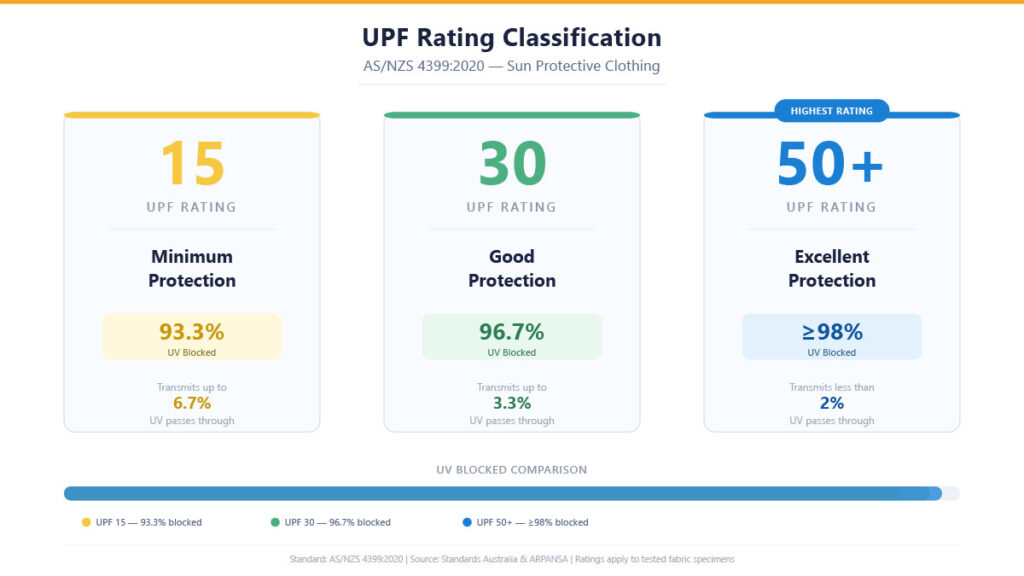
The Australian and New Zealand standard governing this rating is AS/NZS 4399:2020 (Sun protective clothing — Evaluation and classification), published by Standards Australia. Under this standard, fabrics are tested in a laboratory using a spectrophotometer to measure the proportion of solar UV radiation transmitted through the material. The UPF rating is then calculated from that transmission data.
The classification system under AS/NZS 4399:2020 is as follows:
| UPF Rating | Classification |
|---|---|
| 15 | Minimum protection |
| 30 | Good protection |
| 50 / 50+ | Excellent protection |
A fabric rated UPF50+ blocks 98% or more of UV radiation, allowing less than 2% to pass through. This is the highest classification available under the standard. ARPANSA (the Australian Radiation Protection and Nuclear Safety Agency), which operates an accredited fabric testing laboratory, notes that “UPF ratings of 50 and higher provide all-day sun protection even for people with fair skin.”
For hats specifically, the UPF rating applies to the fabric of the crown and brim. A hat can only protect the skin it covers — which is why brim width is as important as the UPF rating of the material itself.
Why Lifeguards Face Exceptional UV Risk
The occupational case for UPF50+ headwear is compelling. According to Cancer Council Australia, outdoor workers receive five to ten times more UV radiation exposure than indoor workers annually. Lifeguards are among the highest-risk category of outdoor workers: they work around water (which reflects and amplifies UV radiation), on open beaches with minimal shade, during peak UV hours, and for extended consecutive shifts throughout the summer season.
Cancer Council Australia estimates that approximately 200 melanomas and 34,000 non-melanoma skin cancers diagnosed in Australia each year are attributable to occupational UV exposure. The risk of squamous cell carcinoma (SCC) among outdoor workers is nearly double that of indoor workers, while basal cell carcinoma (BCC) risk is increased by approximately 1.5 times.
Australia already has one of the highest rates of skin cancer in the world, driven by a predominantly fair-skinned population and high ambient UV levels due to the country’s proximity to the equator. For lifeguards — who may accumulate decades of high-intensity UV exposure over a career — the cumulative risk is substantial.
Under Australian Work Health and Safety legislation, employers and organisations have a legal duty to provide a safe working environment, which includes protection from UV radiation. SLSA’s uniform standards are, in part, a direct response to this legal obligation.
How Straw Hats Meet and Exceed UPF50+ Requirements
Natural straw — particularly tightly woven varieties such as paper straw, seagrass, and toyo — can achieve UPF50+ ratings when the weave density is sufficient. The key variables are:
Weave Density and Porosity
A tighter weave leaves smaller gaps between fibres, reducing the amount of UV radiation that passes through. Hats tested to AS/NZS 4399:2020 must demonstrate consistent UPF performance across the entire hat surface, including the crown and brim.
Brim Width
SLSA’s sun-safety guidelines specify a minimum brim width of 8 cm for adequate face, neck, and ear protection. Wider brims — typically 10–12 cm for lifeguard-grade hats — provide additional coverage for the back of the neck and ears, which are among the most common sites for skin cancer in outdoor workers.
Material Selection
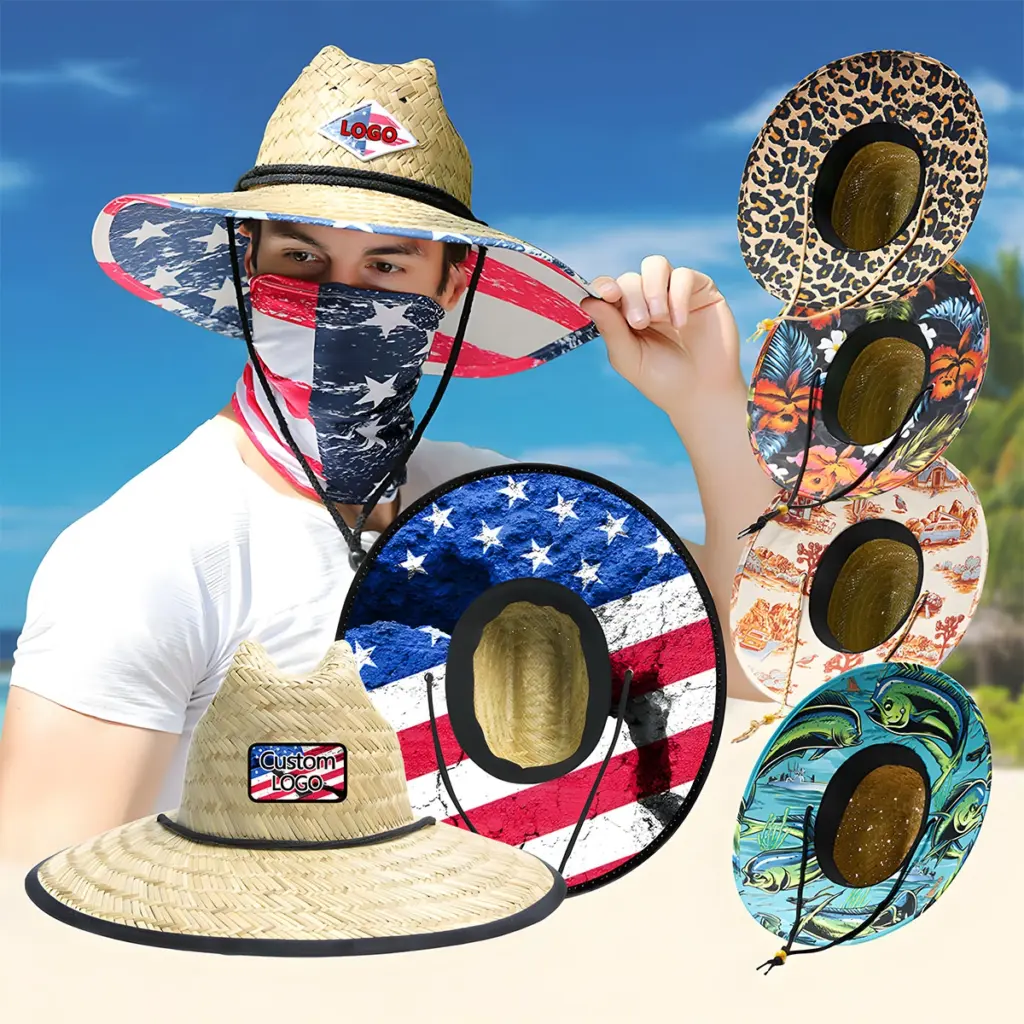
Our UPF50+ wide-brim lifeguard straw hats are manufactured using tightly woven natural straw with a non-reflective underside finish on the brim — directly addressing the SLSA requirement for non-reflective brim undersides. Each production batch is tested to AS/NZS 4399:2020 to confirm the UPF50+ rating before shipment.
For procurement teams sourcing for SLSA-affiliated clubs or aligned organisations, this testing documentation is available on request and forms part of our standard quality control package. You can review our quality control and testing process for full details.
Compliance Considerations for Procurement Teams
If you are sourcing hats for SLSA clubs, lifeguard associations, resorts with beach patrol operations, or any organisation operating under SunSmart or Cancer Council workplace sun-safety frameworks, the following checklist applies:
Material certification: Confirm the hat fabric has been tested to AS/NZS 4399:2020 and carries a UPF50+ (Excellent Protection) rating. Request the test report from the manufacturer.
Brim width: Minimum 8 cm all-round brim, per SLSA sun-safety guidelines. Wider brims (10–12 cm) are preferable for full-shift patrol use.
Brim underside: Non-reflective finish to prevent UV reflection onto the face from below.
Chin retention: A toggle or breakaway chin strap is standard for patrol hats worn in coastal wind conditions.
Branding and customisation: SLSA clubs and affiliated organisations typically require club colours, logos, or “LIFEGUARD” embroidery. Confirm the manufacturer can accommodate this without compromising the UPF rating of the finished hat.
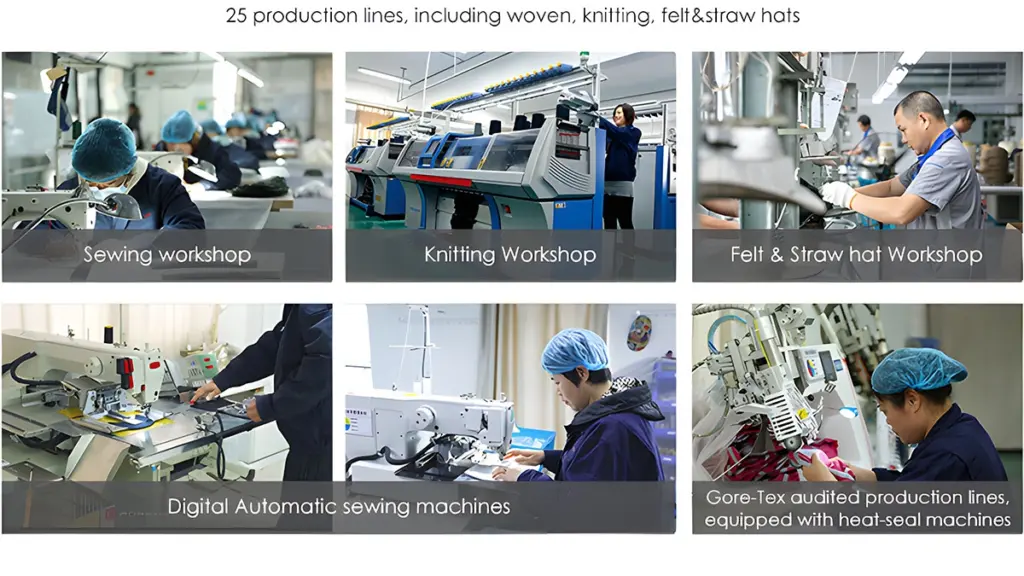
Our OEM straw hat manufacturing service covers all of the above. We work directly with lifeguard associations, resort procurement teams, and uniform suppliers to produce custom lifeguard hats that meet SLSA-aligned specifications at wholesale volumes. For organisations supplying junior lifeguard programs, we also produce kids’ lifeguard straw hats to the same UPF50+ standard.
For buyers evaluating material options, our material selection guide covers the performance characteristics of different straw types and weave densities relevant to UPF compliance.
Manufacturing Considerations: What Makes a Compliant Lifeguard Hat
Producing a hat that genuinely achieves UPF50+ — rather than simply claiming it — requires discipline at every stage of manufacturing.
Weave consistency: Variations in weave tightness across a production run can produce hats where some units pass UPF testing and others do not. Consistent loom tension and quality control at the weaving stage are essential.
Finishing treatments: Some finishing processes (bleaching, dyeing, chemical treatments) can reduce UPF performance. Manufacturers must test the finished hat, not just the raw fabric.
Wet performance: AS/NZS 4399:2020 notes that UPF protection may be reduced when material is wet. For lifeguard hats used in coastal environments, this is a relevant consideration — though the primary function of the hat is shade coverage rather than immersion protection.
Brim stiffness: A wide brim that droops in wind or humidity provides less consistent coverage. Structural brim stiffening (wire, internal banding, or resin treatment) maintains the protective geometry of the hat throughout a patrol shift.
Our wide-brim beach straw hats and lifeguard-specific models are engineered with these factors in mind. For a full overview of our lifeguard hat range and customisation options, visit our lifeguard hat collection or the lifeguard associations procurement page.
Frequently Asked Questions
Does SLSA officially mandate UPF50+ as a specific rating for patrol hats?
SLSA’s patrol uniform policy requires a state-approved wide-brimmed hat as part of the minimum patrol uniform. SLSA’s sun-safety training materials (including the Community Surf Life Saving Certificate Manual) recommend UPF50+ rated materials and specify close-weave construction and a minimum 8 cm brim. While the specific UPF50+ rating requirement may be expressed as a recommendation in some SLSA documents rather than a hard mandate in every state’s uniform policy, it aligns directly with Australian workplace health and safety obligations and the Cancer Council / SunSmart guidelines that SLSA formally endorses. Procurement teams should treat UPF50+ as the effective minimum for any SLSA-aligned supply.
What is the difference between AS/NZS 4399:1996, AS/NZS 4399:2017, and AS/NZS 4399:2020?
The 2020 edition is the current version of the standard. It updated the UPF classification system (removing the “effective UVR penetration” column and adding the word “protection” to each classification tier) and clarified body coverage requirements for garments claiming a UPF rating. For hats, the core test methodology — spectrophotometric measurement of UV transmission — remains consistent across editions. Suppliers referencing the 1996 or 2017 edition are not necessarily non-compliant, but buyers should request test reports issued under the 2020 edition for new procurement.
Can a straw hat genuinely achieve UPF50+?
Yes. Tightly woven natural straw — particularly paper straw, toyo, and seagrass — can achieve UPF50+ ratings when weave density is sufficient. The key is laboratory testing of the finished hat to AS/NZS 4399:2020, not assumptions based on material type alone. We provide test reports for all UPF50+ rated products.
What minimum order quantities apply for custom lifeguard hats?
Our standard MOQ for custom OEM lifeguard hats is 300 units per style/colour. For SLSA clubs and lifeguard associations with smaller requirements, we can discuss consolidated orders. Contact our B2B team for a quote.
How long does production and delivery take for a custom order?
Standard lead time for custom OEM orders is 45–60 days from artwork approval, including production and sea freight to Australian ports. Air freight options are available for urgent orders. We recommend planning procurement 90 days ahead of the patrol season start.
Sources / References
- ARPANSA — Australian sun protective clothing standard (AS/NZS 4399): https://www.arpansa.gov.au/our-services/testing-and-calibration/ultraviolet-services/labelling-sun-protective-clothing/au-standard
- ARPANSA — Clothing and fabric UPF testing: https://www.arpansa.gov.au/our-services/testing-and-calibration/ultraviolet-radiation-testing/fabric-testing
- Surf Life Saving Australia — Patrol Uniforms (Sydney Northern Beaches, reflecting national SLSA Policy 1.05): https://www.surflifesaving.net.au/lifesaving/patrol-info/patrol-uniforms/
- SLST — Community Surf Life Saving Certificate Manual (sun safety / hat requirements): https://www.slst.asn.au/media/82073/psar35-community-surf-life-saving-certficate-manual-v2.pdf
- SLSQ — Patrol Operations Manual (wide-brimmed hats compulsory): https://www.manula.com/manuals/slsq-tom/lifesaving-pom/1/en/topic/patrol-uniforms-slsq
- Cancer Council Australia — Skin cancer and outdoor work: https://www.cancer.org.au/assets/pdf/skin-cancer-and-outdoor-work-a-work-health-and-safety-guide
- Cancer Council Australia — SunSmart at work: https://www.cancer.org.au/cancer-information/causes-and-prevention/sun-safety/be-sunsmart/sunsmart-at-work
- Wikipedia — Ultraviolet protection factor: https://en.wikipedia.org/wiki/Ultraviolet_protection_factor